
Across the Middle East, enterprises are at a critical crossroads when selecting an ERP platform. SAP S/4HANA and Oracle ERP Cloud have become the two dominant choices for large and fast‑growing organizations in the GCC and broader MENA region, each promising scalability, AI‑driven intelligence, and cloud‑ready architecture tailored to complex, multi‑country operations. At the same time, solutions such as SAP Business One are gaining traction as a more accessible ERP option for mid‑size and growing businesses that want enterprise‑grade capabilities without the full‑scale investment of SAP S/4HANA or Oracle Fusion.
ERP in the Middle East: A cloud‑first reality
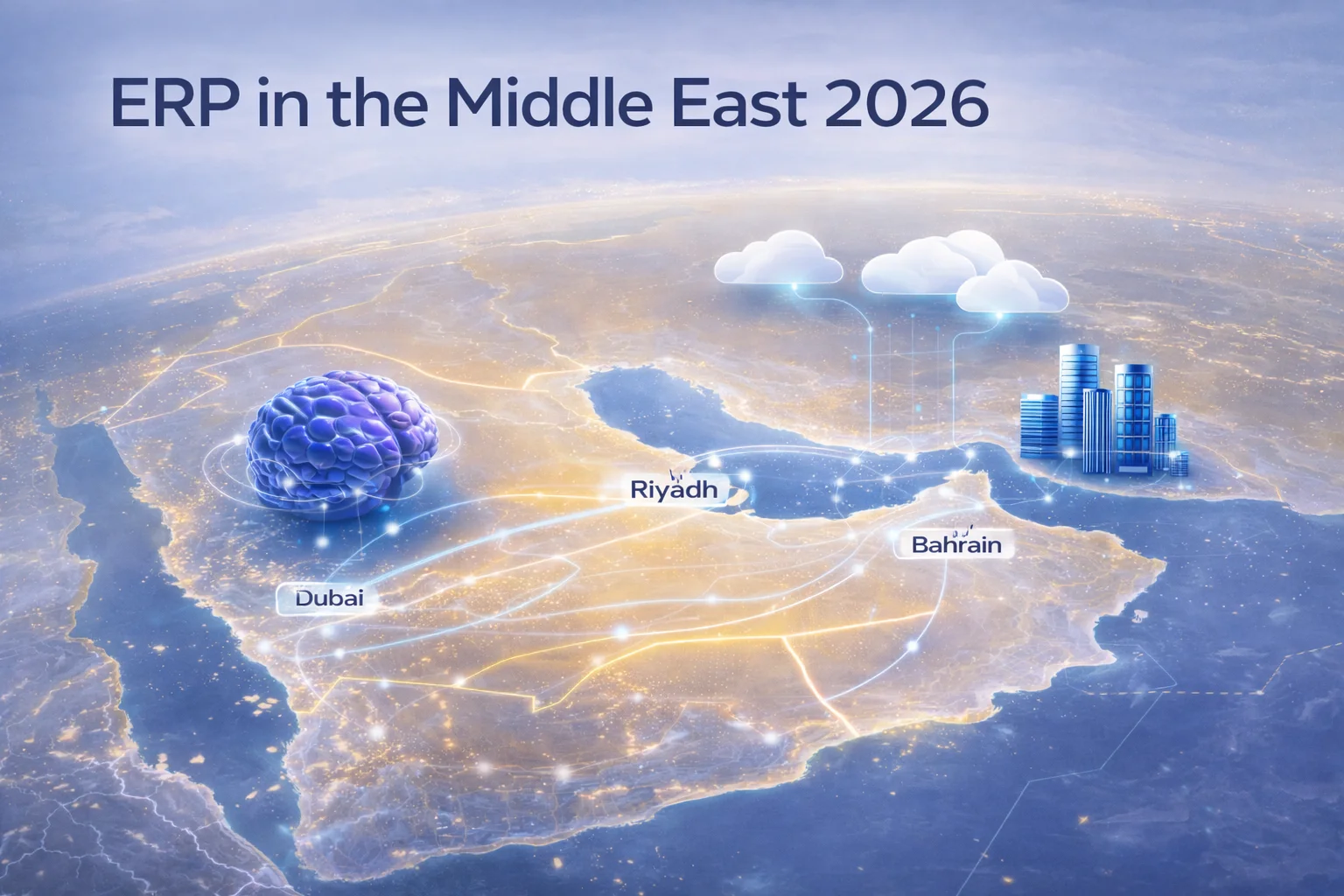
In the GCC and MENA, ERP systems are no longer “back‑office tools” but the digital backbone of finance, supply chain, HR, and customer operations. Governments in the UAE, Saudi Arabia, and other Gulf states are pushing cloud‑first policies, digital‑government initiatives, and AI‑enabled services, which in turn push enterprises toward modern, integrated ERP platforms. By 2026, cloud‑native or cloud‑enabled ERP is the default expectation for many GCC companies, especially in sectors such as retail, real estate, logistics, and public‑sector organizations.
SAP S/4HANA and Oracle ERP Cloud sit at the heart of this shift, each embedding AI, machine learning, and automation to support real‑time decision‑making and compliance‑driven reporting. For Middle Eastern businesses, the key question is not whether to adopt a modern ERP, but which platform aligns best with their industry, regulatory environment, and long‑term digital‑transformation roadmap.
SAP S/4HANA: The digital core for GCC enterprises

SAP S/4HANA is SAP’s next‑generation ERP suite built on the in‑memory SAP HANA database, designed for large, multi‑entity organizations that manage complex, cross‑border operations. In the Middle East, it is widely used by national oil companies, large conglomerates, and government‑linked enterprises that need deep process control, multi‑currency support, and strong integration with SAP’s broader ecosystem.
Key strengths for GCC‑based users include:
- In‑memory computing for real‑time analytics and faster closing cycles.
- Embedded AI and machine learning to automate finance, procurement, and supply‑chain tasks.
- End‑to‑end coverage of finance, logistics, manufacturing, and project management in one system.
- Flexible deployment across on‑premise, private cloud, and public‑cloud models, which helps meet GCC‑style data‑residency and hybrid‑IT requirements.
SAP S/4HANA also integrates tightly with SAP BTP, SAP SuccessFactors, SAP Ariba, and SAP Concur, making it a natural fit for enterprises already invested in the SAP ecosystem.
Oracle ERP Cloud: Agility for fast‑growing GCC firms

Oracle ERP Cloud (Fusion Cloud ERP) is a fully cloud‑native SaaS platform built for enterprises that want rapid deployment, built-in automation, and strong financial‑management capabilities. In the Middle East, it appeals to fast‑growing businesses, retail chains, and mid‑size conglomerates that prioritize finance‑led transformation and want to avoid managing on‑premise infrastructure.
Core advantages for GCC organizations include:
- Unified cloud experience with automatic updates, seamless scalability, and multi‑tenant architecture.
- Integrated AI and analytics embedded across finance, procurement, and supply‑chain workflows.
- Strong financial‑management and compliance features, including revenue recognition and audit‑ready reporting.
- Lower operational overhead, since Oracle manages the infrastructure and upgrades, which suits companies with limited internal IT resources.
Oracle Fusion also integrates well with Oracle CX, SCM, and HCM, making it attractive for organizations that want a single‑vendor, cloud‑native stack.
| Aspect | SAP S/4HANA | Oracle ERP Cloud |
| Architecture | In‑memory, supports hybrid and on‑premise models; ideal for large, asset‑heavy GCC enterprises. | Fully cloud‑native, multi‑tenant; suited to agile, cloud‑first GCC businesses. |
| Deployment | On‑premise, private cloud, public cloud; aligns with GCC firms that want data‑residency and phased migration. | Public cloud only; fits companies that embrace national cloud‑first policies. |
| Database | SAP HANA, optimized for real‑time analytics in high‑volume environments. | Oracle Autonomous Database, with self‑tuning and security features. |
| Industry coverage | Strong in oil & gas, manufacturing, utilities, and large conglomerates. | Strong in services, retail, and mid‑size enterprises. |
| AI & analytics | Predictive and prescriptive analytics across finance, supply chain, and projects. | Deep AI for finance, planning, and anomaly detection. |
| Customization | Highly flexible via ABAP and Fiori apps; suits complex GCC‑specific processes. | Configuration‑driven with Oracle Visual Builder; less flexible but upgrade‑safe. |
| User experience | SAP Fiori‑based, role‑oriented UI. | Oracle Fusion UI, guided and user‑centric. |
| Scalability | Enterprise‑grade for multi‑country, multi‑entity GCC groups. | Strong for fast‑growing, cloud‑native GCC enterprises. |
SAP S/4HANA vs Oracle ERP Cloud: GCC‑centric comparisonCost, TCO, and the role of SAP Business One

For Middle Eastern enterprises, cost is a major deciding factor. SAP S/4HANA involves higher upfront licensing and implementation costs, but can deliver strong long‑term ROI through process standardization and analytics‑driven efficiency. Oracle ERP Cloud follows a pure SaaS model, which lowers initial investment but may increase recurring fees over time.
In this landscape, SAP Business One serves as a strategic entry point for mid‑size GCC companies that need ERP‑level control without the complexity and cost of SAP S/4HANA. It offers:
- Affordable pricing, often starting at a few thousand rupees per user per month, which suits regional SMEs and family‑owned businesses.
- Easy deployment on‑premise or in the cloud, with rapid go‑live timelines.
- Scalability that allows firms to grow into SAP S/4HANA when they expand into multiple countries or industries.
For many GCC‑based mid‑market firms, SAP Business One acts as a practical bridge between legacy spreadsheets and full‑scale ERP, especially when supported by local partners with regional implementation expertise.
Integration, security, and compliance in the GCC
Both SAP and Oracle provide robust security frameworks aligned with global standards such as GDPR, SOC 1/2, and ISO 27001, which helps GCC enterprises meet regional data‑protection expectations. SAP S/4HANA offers role‑based access control and audit trails tightly integrated with HANA, while Oracle ERP Cloud automates compliance with AI‑driven anomaly detection and financial‑controls workflows.
In the Middle East, integration with national tax portals, e‑invoicing mandates, and local banking systems is critical. SAP’s ecosystem (SuccessFactors, Ariba, Concur) and Oracle’s unified cloud stack (CX, SCM, HCM) both support these requirements, but SAP’s modular approach often appeals to large, multi‑vendor environments, while Oracle’s integrated suite suits organizations that prefer a single‑vendor model.
Which ERP is better for Middle Eastern businesses?
For large, asset‑intensive, multi‑country GCC enterprises such as national oil companies, mega‑construction groups, and diversified conglomerates SAP S/4HANA is often the better fit due to its deep industry templates, hybrid‑deployment flexibility, and strong integration with SAP’s broader ecosystem.
For fast‑growing, finance‑centric, or cloud‑first GCC organizations—including retail chains, mid‑size conglomerates, and service‑driven firms like Oracle ERP Cloud offers a compelling alternative with rapid deployment, built-in AI, and lower infrastructure management overhead.
In the interest of mid‑size businesses in the UAE, Saudi Arabia, and other GCC markets, SAP Business One provides a cost‑effective, scalable stepping stone toward full‑scale ERP, combining enterprise‑grade functionality with localized support and affordable pricing.